
دستهبندی: بردها و ماژولها
برچسبها :
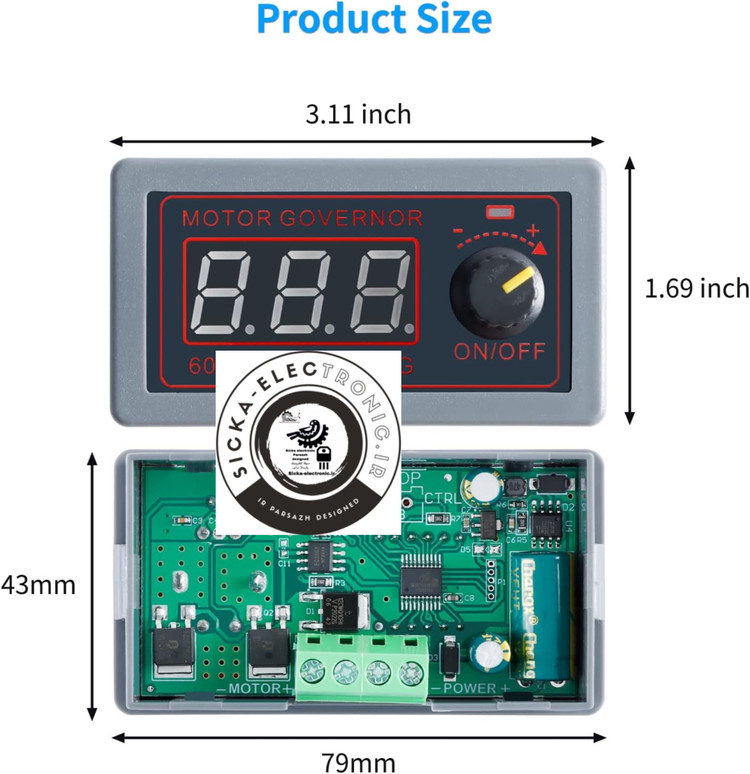
سایز و ابعاد:7.9 × 4.3 × 2.6 سانتیمتر
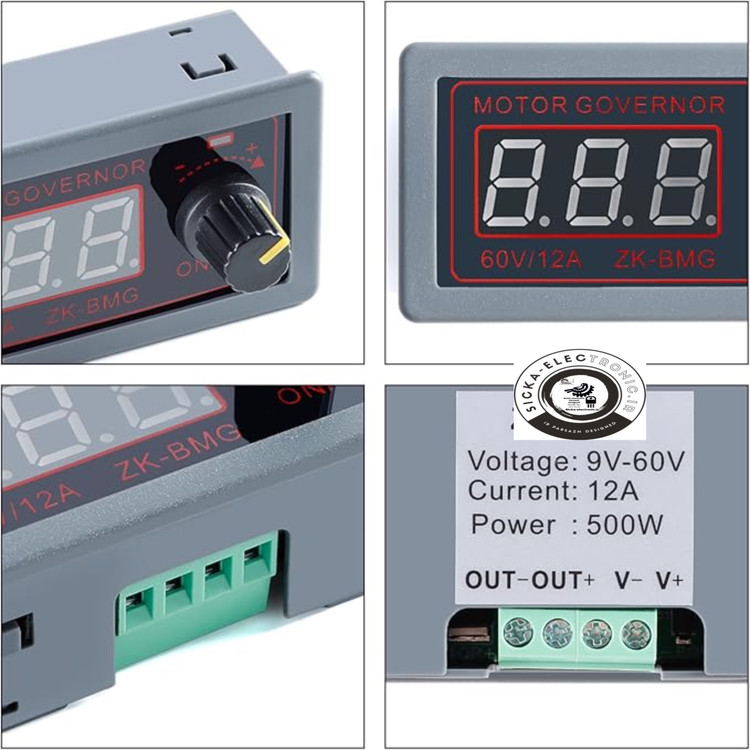
ولتاژ کاری:9 تا 60 ولت(اعلامی تولید کننده در دیتا آمازون)
توان:۵۰۰ وات
سایز و ابعاد
7.9 × 4.3 × 2.6 سانتیمتر
ولتاژ کاری
9 تا 60 ولت(اعلامی تولید کننده در دیتا آمازون)
توان
۵۰۰ وات
سلام
درایور و کنترل دور موتور 12 آمپر /این درایور موتور یک ماژول الکترونیکی قدرتمند و پرکاربرد است که برای کنترل دقیق سرعت موتورهای جریان مستقیم با توان بالا طراحی شده است. این درایور به دلیل قابلیتهای متنوع، کارایی بالا و سادگی استفاده، در بسیاری از پروژههای صنعتی، رباتیک و کاربردهای سنگین مورد استفاده قرار میگیرد.
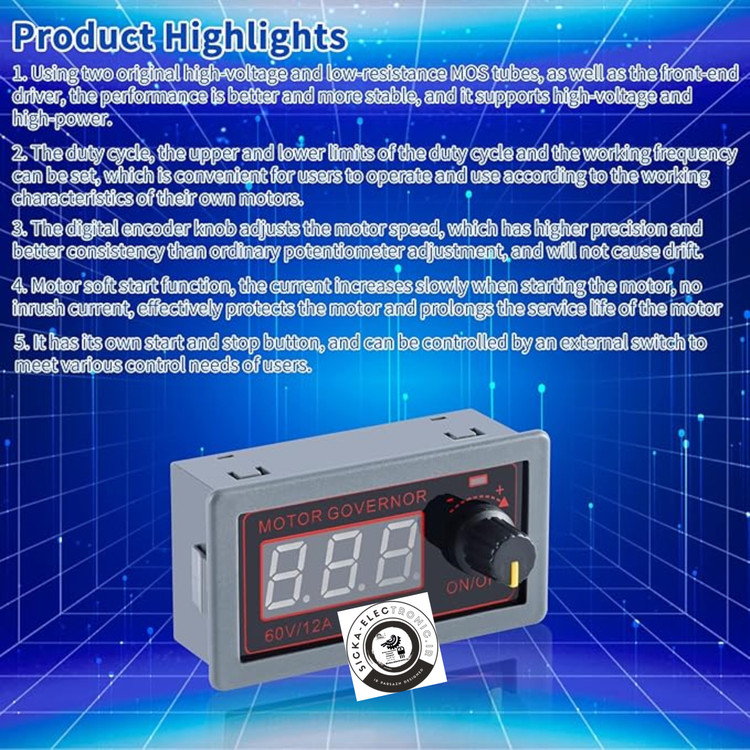
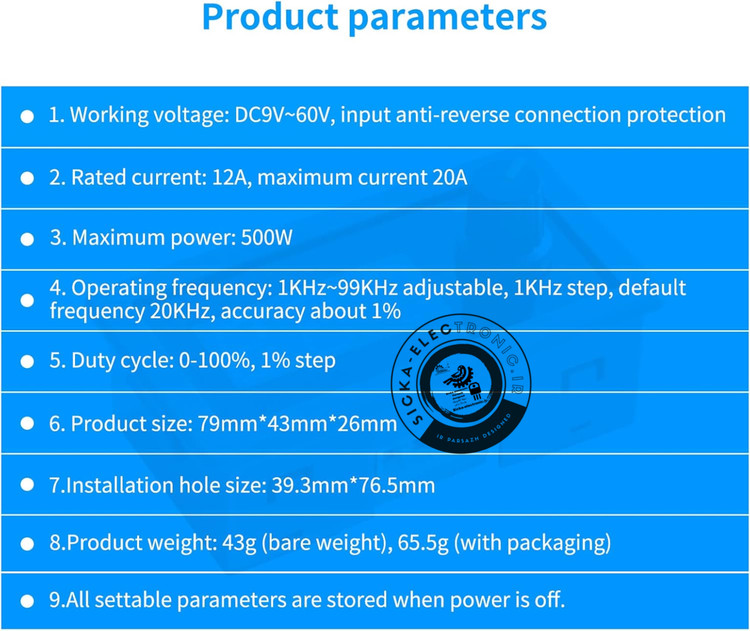
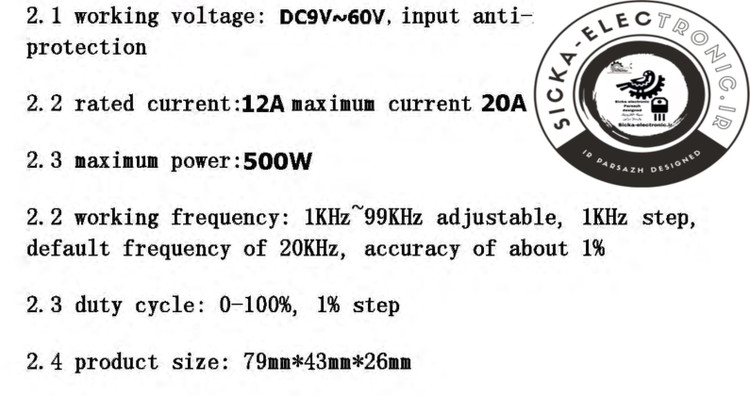
♥Product parameters: 1. Working voltage: DC9V~60V, input anti-reverse connection protection 2. Rated current: 12A, maximum current 20A 3. Maximum power: 500W 4. Operating frequency: 1KHz~99KHz adjustable, 1KHz step, default frequency 20KHz, accuracy about 1% 5. Duty cycle: 0-100%, 1% step 6. Product size: 79mm*43mm*26mm Installation hole size: 39.3mm*76.5mm 7. Product weight: 43g (bare weight), 65.5g (with packaging) 8. All settable parameters are stored when power is off.
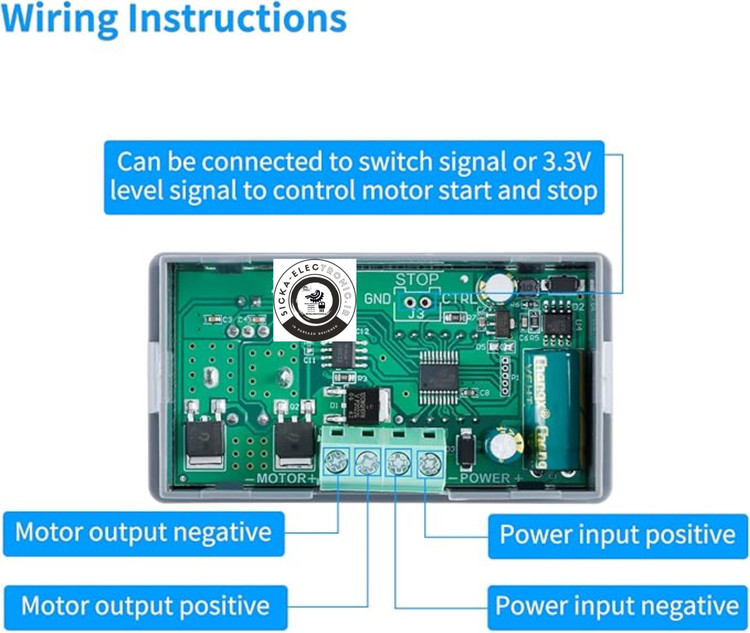
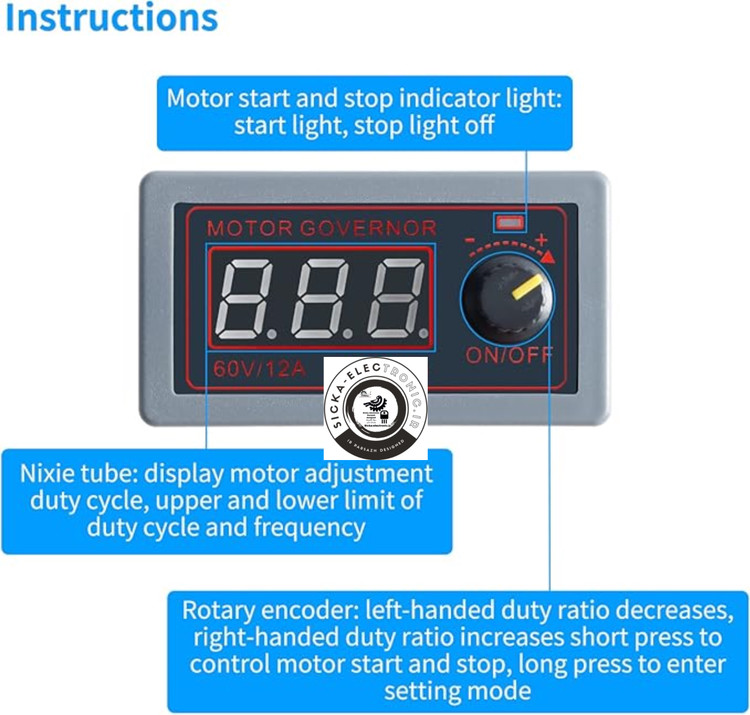
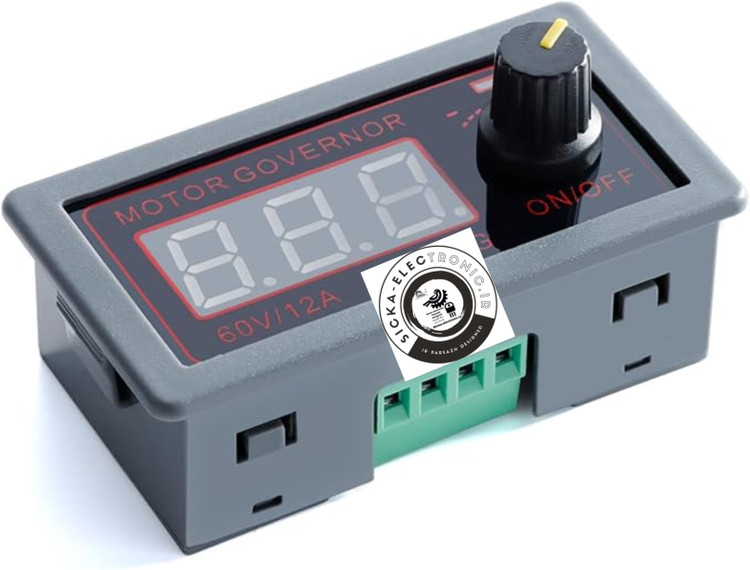
♥ Wiring Instructions: ① Motor start and stop indicator: start light on, stop light off ②Digital tube: display the duty cycle of motor adjustment, upper and lower limit of duty cycle and frequency ③Digital tube: Display the motor adjustment duty cycle, upper and lower limit of duty cycle and frequency" ④It can be connected to switch signal or 3.3V level signal to control the start and stop of the motor ⑤ Motor output positive and negative poles Power input positive and negative
♥ Digital encoder knob operation: ①In the default interface: (the default display is the duty cycle) Short press: switch the motor on and off. Press and hold for 10 seconds: enter the setting interface. Counterclockwise rotation: the duty cycle decreases. Clockwise rotation: increased duty cycle.
♥②Setting interface: Short press: select the setting parameter, the setting parameter can be switched between ON-OFF, duty cycle lower limit, duty cycle upper limit, and operating frequency. ON-OFF is the default module power-on normally open or normally closed, the lower limit of the duty cycle is displayed in the form of "L" + two digits, and the upper limit of the duty cycle is displayed in the form of "H" + two digits or "100", the operating frequency Displayed in the form of "+two digits".
♥STOP port on the back: It can be connected to external switch buttons or a 3.3V level. Do not use it in complex electromagnetic environments, and there is no relevant protection inside the circuit. (Note that the external switch should use a self-reset button or key, press it once to turn it on, and press it again to turn it off; it cannot realize the function of always closing the output to open, and not closing the output to close).